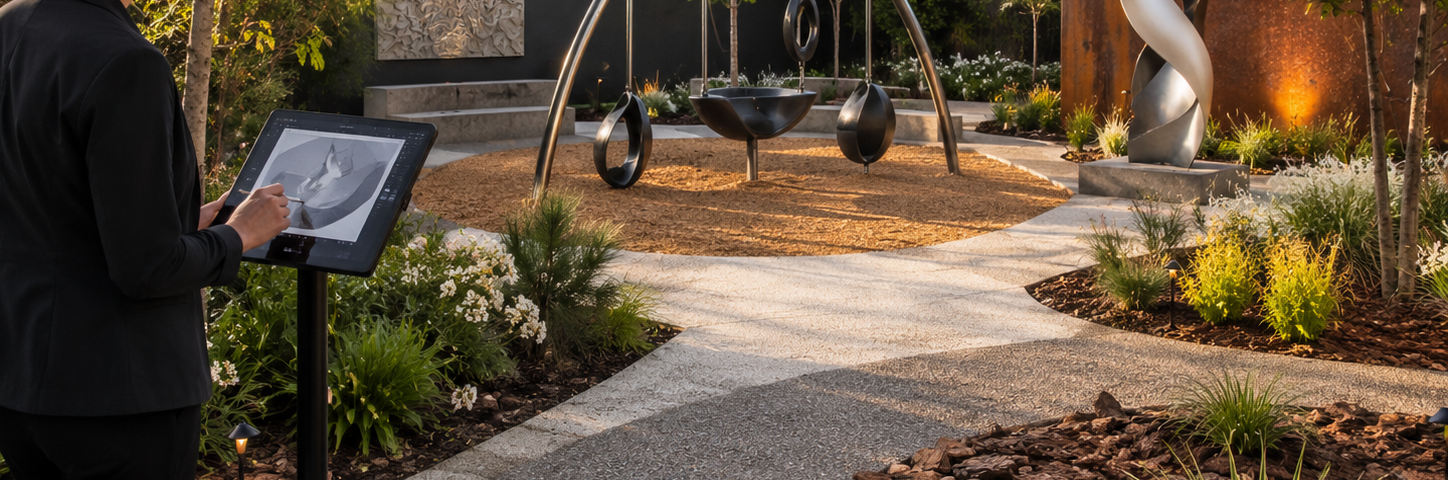
Technology is changing how artists, designers and landscape planners think about outdoor spaces. Digital sketches, 3D modelling, site mapping and material planning tools now help creative teams visualise an installation before it is built. In garden-based art projects, Pine Bark can add texture, contrast and warmth around sculptural pieces, outdoor galleries, sensory gardens and community spaces. Its natural appearance can soften hard surfaces while supporting a layered design that feels grounded rather than overly engineered.
Public art and play environments are also becoming more thoughtful as technology improves planning and safety outcomes. Designers can use digital layouts to test movement, viewing angles and surface zones before materials are installed. Playground mulch can support creative outdoor areas where children, families and visitors interact with art in a more physical way. Around sculptural play forms, interactive installations or nature-inspired learning spaces, the right surface finish can help the design feel welcoming while still serving a practical purpose.
In broader landscape art, garden mulch can help connect planted areas, pathways and feature zones into one clear visual composition. Artists and garden designers may use drone photography, augmented reality previews or digital planting plans to understand how an outdoor artwork will appear from different heights and angles. Mulch can then become part of the colour palette, creating contrast against greenery, stone, timber, steel, ceramic or concrete elements. This makes it more than a background product; it becomes part of the creative surface.
Technology used in the arts does not always mean screens, lights or digital projections. It can also involve smarter planning, better material selection and more accurate installation. A digital concept plan may show where a sculpture should sit, how visitors should approach it and what textures will surround it. From there, garden supplies help turn the plan into a physical experience people can walk through, touch and remember.
Home gardens can use the same approach on a smaller scale. A homeowner might plan a courtyard feature wall, a mosaic path, a ceramic sculpture or a creative planting bed using design apps or online mood boards. Once the idea is clear, natural materials help give the space depth. Mulch, bark, gravel, edging and planting can frame the artwork so it feels integrated rather than placed as an afterthought.
Commercial spaces can take this further. Councils, schools, galleries, hospitality venues and business precincts often use outdoor art to create identity and improve public appeal. Technology can help these projects stay organised by mapping sun exposure, drainage, pedestrian movement and maintenance access. When those details are planned early, the finished space can look more polished and remain easier to care for.
Material texture is especially important in art-focused landscapes. Smooth sculptures can stand out against rough organic surfaces. Bright planting can feel stronger when set against deeper earth tones. Natural ground covers can help guide the eye without competing with the main artwork. These choices are practical, but they also affect mood, proportion and visual balance.
Technology gives designers more control, but physical materials give the artwork presence. A digital render can show the concept, yet the final impression depends on how people experience the space in real life. The sound of footsteps, the softness of planting, the contrast of surfaces and the way light falls across the ground all influence how an outdoor artwork is received.
The best creative landscapes combine planning and feeling. Digital tools can help refine the idea, while garden supplies provide the texture, structure and natural finish that make the space believable. Whether used in a home courtyard, public art project or commercial outdoor setting, thoughtful material choices can help technology-led design feel warmer, more human and more connected to place.